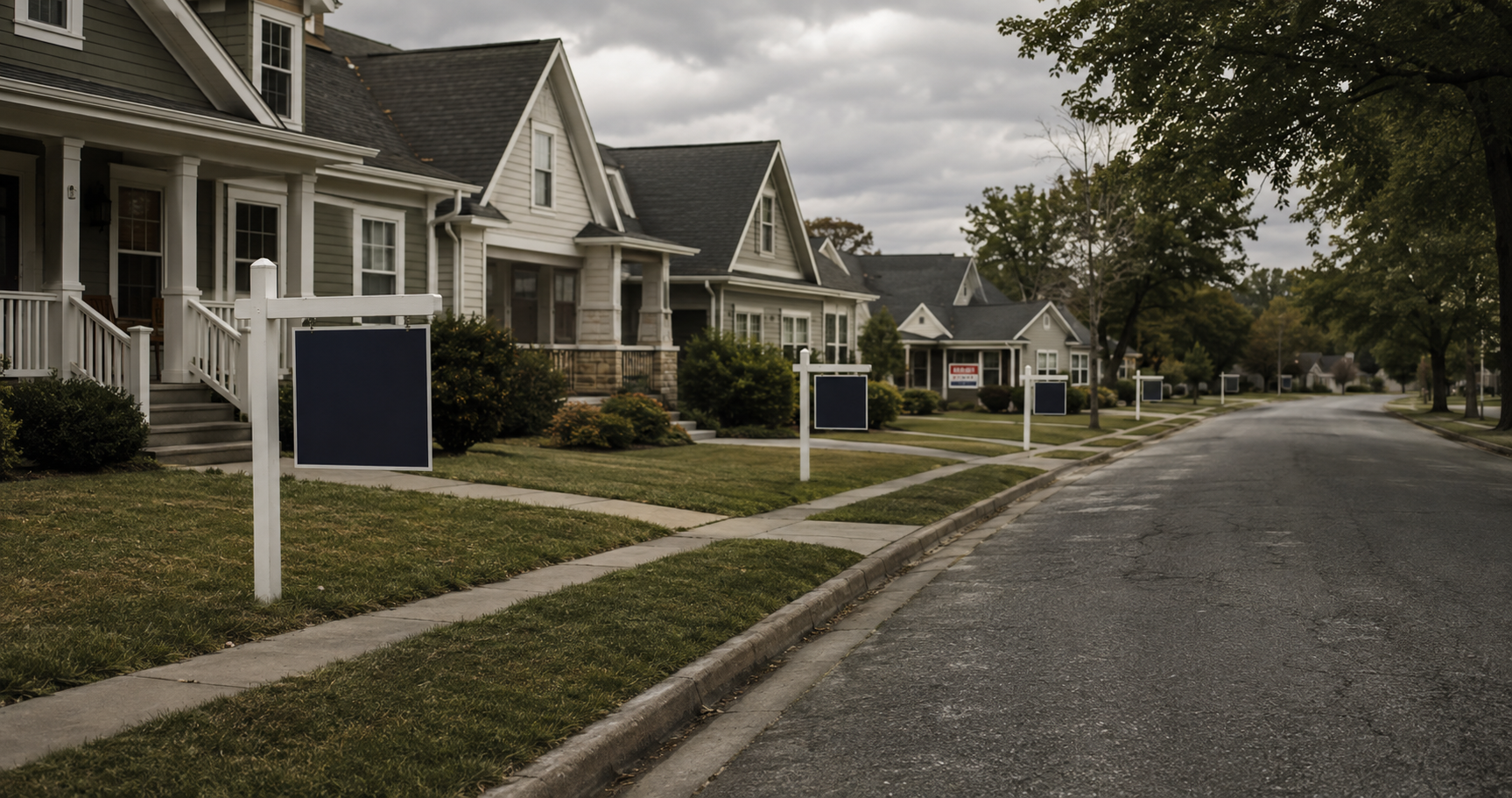
I keep hearing that the housing market is fine.
Prices remain high. Most homeowners are not behind on their mortgages. Millions of people remain protected by fixed-rate loans secured before interest rates rose. There is no obvious replay of the subprime mortgage crisis that preceded the 2008 collapse.
All of that may be true.
But it does not mean the housing market is healthy.
During the first half of 2026, 227,548 U.S. properties received at least one foreclosure filing. That is a 21 percent increase from the same period last year and a 28 percent increase from two years ago.
That does not mean 227,548 families lost their homes. The figure includes properties receiving default notices or auction notices, as well as completed foreclosures. But foreclosure starts increased 18 percent, while completed foreclosures increased 33 percent. Those are meaningful movements, even though foreclosure activity remains well below the extraordinary levels reached during the last housing crisis.
At the same time, the relationship between buyers and sellers has changed dramatically.
In February, Redfin estimated that there were approximately 630,000 more home sellers than buyers in the United States. That amounted to 46.3 percent more sellers than buyers and represented the largest gap in Redfin’s records, which date back to 2013.
Those two statistics do not, by themselves, prove that the housing market is collapsing.
But they are warning lights.
Something has to give
The basic problem is affordability.
Home prices remain near historic highs. Mortgage rates remain elevated. Property taxes, insurance, utilities, maintenance and the ordinary cost of living have all increased. The monthly cost of buying the same house is dramatically higher than it was when mortgage rates were near 3 percent.
Sellers may still think their house is worth what it was during the peak of the market. Buyers, however, have to qualify for and make the monthly payment today.
That creates a standoff.
Sellers do not want to lower their prices. Buyers cannot afford to meet them. Transactions slow, listings remain on the market longer and inventory begins to accumulate.
Eventually, one side has to move.
Mortgage rates could fall substantially. Household incomes could rise quickly. Or home prices could come down.
Of those three possibilities, falling prices may prove to be the fastest route back to a functioning market.
Your house is worth what the next buyer will pay
Many homeowners understandably believe this problem does not affect them.
They can afford their mortgage. They have a low interest rate. Some own their homes outright. They have no intention of selling.
But a homeowner’s personal financial stability does not protect the market value of the house.
Real estate values are established through comparable sales. If several similar homes in a neighborhood sell for $500,000, it becomes very difficult to persuade a buyer, lender or appraiser that the house next door is worth $1 million.
It does not matter that the owner of that house is financially comfortable. It does not matter what the house was supposedly worth two years ago. It does not matter what the owner hopes to receive.
The market value is what another person is willing and able to pay.
That is why a relatively small number of motivated or distressed sellers can affect an entire neighborhood. Their transactions become the new evidence against which every other property is measured.
Corrections can feed themselves
This is also where psychology enters the market.
Not every seller has to sell. But once prices begin falling, some people who were merely considering a move become more motivated. They would rather sell now than watch a significant portion of their equity disappear.
Buyers see the same decline and reach the opposite conclusion. If prices are falling, why rush to buy today?
Sellers become more eager. Buyers become more patient. That creates additional downward pressure.
The process can become self-reinforcing:
- A few sellers reduce their asking prices.
- Lower-priced transactions become new comparables.
- Neighboring property values are marked down.
- More owners decide to sell before values fall further.
- Buyers wait for still better prices.
- Inventory increases and sellers make additional concessions.
This does not have to become a national collapse to cause serious losses. Housing markets are local. Some cities may remain stable while others experience severe corrections. Markets with substantial new construction, rapidly rising insurance costs, investor-owned inventory or pandemic-era price spikes are particularly exposed.
This is not necessarily 2008
There are important differences between the present market and the housing crisis of 2008.
Mortgage underwriting has generally been stronger. Many homeowners have substantial equity. Millions are carrying fixed-rate mortgages at rates far below those available today. Overall mortgage delinquency remains below pre-pandemic levels, although it has been rising in economically vulnerable areas.
That matters. It makes a sudden nationwide wave of forced selling less likely.
But “this is not 2008” is not the same as saying there is no problem.
The market does not need to repeat 2008 for homeowners to lose a substantial amount of equity. It does not need widespread subprime mortgage fraud for prices to fall. It only needs more people willing to sell than there are buyers willing and able to purchase at current prices.
We already have that imbalance.
The assumption being tested
For years, many Americans came to believe that housing prices moved in only one direction.
Low interest rates, constrained inventory and pandemic-era demand rewarded nearly anyone who already owned a house. People began treating that period as the normal condition of the housing market rather than an unusual combination of circumstances.
That assumption is now being tested.
The number of foreclosure filings is rising. Sellers dramatically outnumber buyers. Affordability remains broken. Mortgage rates continue to constrain demand, while the broader cost of living is placing additional pressure on household budgets.
None of this guarantees a nationwide collapse.
It does suggest that the market is more fragile than the headline prices make it appear.
Owning an expensive house is not the same thing as owning a house that another person can afford to buy. That distinction may become one of the most important economic lessons of 2026.
Sources
ATTOM: Mid-Year 2026 U.S. Foreclosure Market Report
Redfin: There Are a Record 630,000 More Home Sellers Than Buyers
Federal Reserve Bank of New York: Where Are Mortgage Delinquencies Rising the Most?